
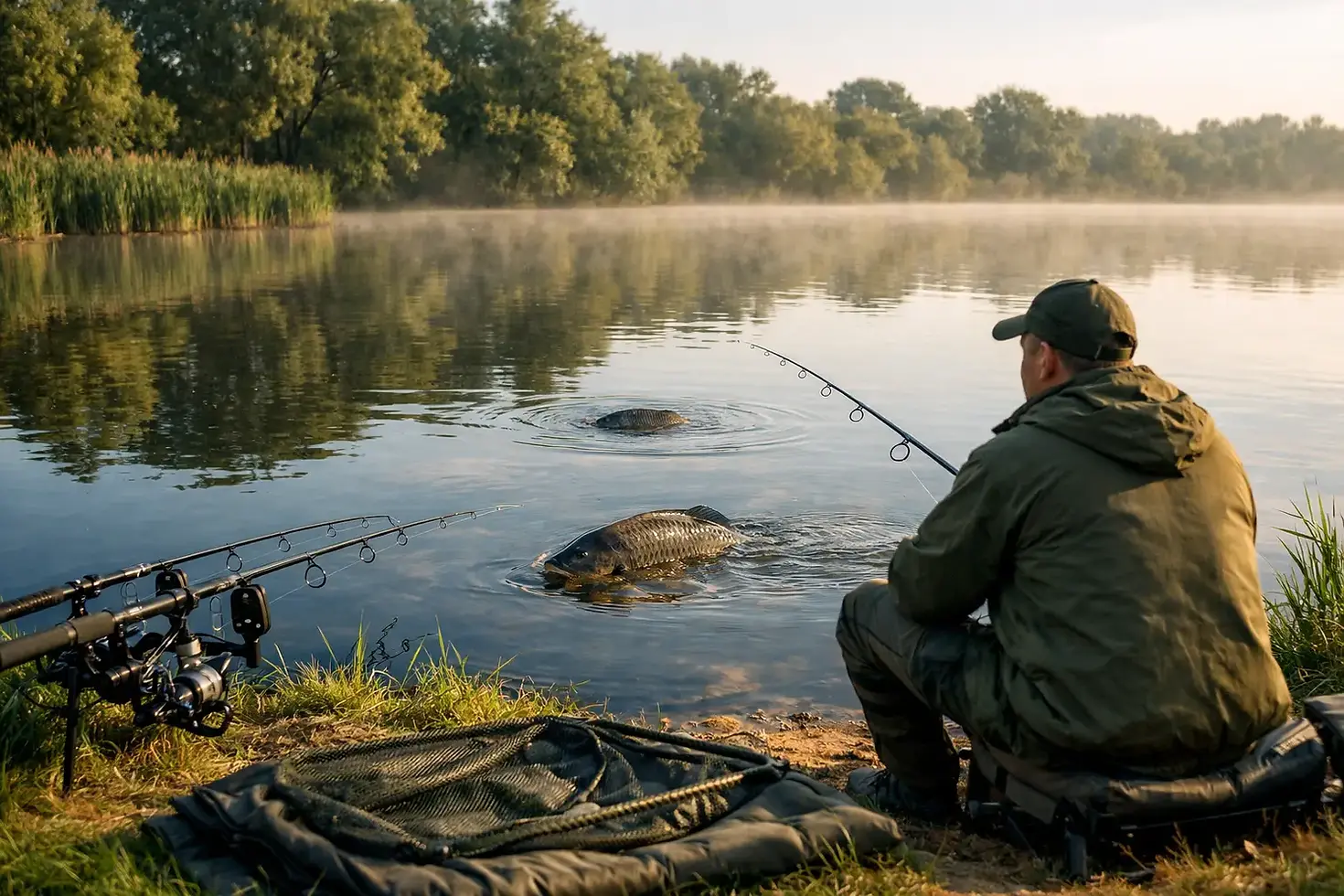
Low Stock Carp Lake Benefits for Better Fishing
A lake can hold plenty of carp and still leave you feeling as though you are fishing around other anglers rather than fishing your own water. That is where the low stock carp lake benefits become clear. Fewer fish, sensible angler numbers and room to think can turn a week in France from a frantic race for bites into the focused carp fishing holiday many anglers actually want.
For specimen anglers, low stock does not simply mean a tougher lake. It means each capture carries more meaning, watercraft matters, and you can build a proper picture of the lake without having to work around occupied swims, constant casting and pressured fish.
What does a low-stock carp lake really mean?
A low-stock lake is not defined by one fixed number. It is a lake where the fish stock is balanced sensibly against the water’s size, natural food supply and the amount of angling pressure it receives. The important point is that the lake is not stocked purely to guarantee action every hour of the day.
On a small, private venue, that balance creates a very different feel. Rather than competing with a busy bank, you have time to watch the water, identify patrol routes and put your rigs where you have genuine confidence. You are fishing for individual carp with their own habits, not simply casting towards the area that has received the most bait.
At La Retraite Carp Fishing, the 2.5-acre spring-fed lake is limited to a maximum of three anglers per week. That gives each guest space to fish properly, with up to three rods each, while keeping the atmosphere quiet and the fish under far less pressure than they would be on a crowded commercial water.
Low stock carp lake benefits that matter on the bank
More water to read and fish effectively
On a heavily booked lake, the best-looking features may be out of reach before you have even unpacked. A low-pressure venue gives you far more freedom to respond to what the water is telling you.
You may see fish show at first light along one marginal shelf, then spot fizzing over a clearer area later in the day. With fewer anglers around, you can adjust your plan without worrying that another line will be placed over the same route. That freedom is especially valuable during a week-long trip, when patterns often reveal themselves gradually rather than in the first 24 hours.
It also encourages better fishing. Instead of casting three rods to familiar open-water spots and waiting, you can spend time finding firm areas, checking depths, observing wind direction and keeping disturbance to a minimum.
Less line pressure on the carp
Carp learn quickly, particularly in small waters that see regular anglers. Repeated casting, heavy baiting, lead drops and lines crossing their preferred routes can make them cautious. Fish may feed at awkward times, avoid popular areas or approach bait far more carefully.
A limited angler capacity helps reduce that accumulated pressure. There are fewer lines in the water, less noise around the lake and fewer occasions when fish are pushed from one end of the venue to the other. The result is not a promise of easy fishing - carp are still carp - but a more natural opportunity to target them.
For many experienced anglers, that is exactly the appeal. A capture gained through observation, accurate presentation and patience is far more satisfying than a quick run produced by sheer stock density.
A calmer, more enjoyable holiday
French carp fishing should offer more than a bivvy pitched tightly beside the next group. You have travelled a long way for the chance to settle into your own rhythm: morning coffee by the water, a quiet evening watching for signs, and the possibility of a proper take at any hour.
Low angler numbers make this possible. There is less foot traffic around the lake, less noise after dark and no need to race for a swim. You can keep your area tidy, move when the conditions call for it and enjoy the surroundings between bites.
This matters when you are travelling with a fishing partner, friends or family. The trip feels like a holiday as well as a fishing mission. A peaceful base, comfortable accommodation and the Charente countryside offer a better balance than a packed venue where every decision revolves around avoiding the next angler.
Better opportunities for individual fish
On waters with a modest, well-managed stock, anglers can often build a connection with what is happening beneath the surface. You may recognise a fish from previous catches, notice a particular carp favouring a windward corner, or work out that a group is visiting a certain area only after dark.
That sense of targeting individual fish is a major part of the attraction. It asks more of you than simply finding a spot where fish are repeatedly fed. But it also gives you a greater sense of achievement when the plan comes together.
The trade-off is straightforward: you may not receive constant runs. If your only aim is the highest possible number of captures in a short break, a high-stock runs water may suit you better. If you value quality, space and the chance to fish thoughtfully, a low-stock lake is usually the stronger choice.
Why limited angler numbers are just as important
Fish stock is only half the story. A lake can have a sensible number of carp but still feel overfished if too many rods are allowed on the water. This is why the number of anglers, rather than the stock figure alone, should shape your choice of venue.
Three anglers fishing a maximum of three rods each creates a very manageable amount of pressure on a 2.5-acre lake. It allows for proper separation, considered baiting and quiet periods when the lake can settle. It also means you are not dealing with the constant disruption that comes from anglers arriving, departing or changing swims around you.
For a group of friends, exclusive or low-capacity fishing also removes much of the uncertainty from a foreign trip. You know who is on the lake, how the venue will feel and how much room you will have before you leave home. That clarity makes planning bait, rigs and equipment much easier.
Tactics for getting the most from a lower-stock venue
The best approach is usually to arrive with confidence in a few reliable methods, then let the lake dictate the details. Do not assume that the same amount of bait, the same spot or the same rig will work all week.
Start by watching. Look for shows, clouded water, bubbling, liners and changes in bird activity. Walk the lake when appropriate and pay attention to where the wind is pushing natural food. A low-stock water rewards this kind of patience because one useful observation can be more valuable than a large bed of bait placed without evidence.
Keep your presentations clean and purposeful. Accurate casting, sharp hooks and rigs suited to the lakebed matter more when bites may be less frequent. If you find a productive area, avoid overworking it. A measured baiting approach often gives carp the confidence to return, particularly where there is little competition and no need to force a response.
Night fishing can be especially productive, but it should not become an excuse to ignore daytime signs. Use the quiet hours to maintain your best chances, then reassess in the morning. The advantage of unrestricted access is that you can fish the moments that matter rather than being restricted by opening times or a crowded bank.
Fish welfare and the quality of the experience
A balanced stock and low angler pressure can support a more considered fishery environment. Carp have room to feed naturally, recover after capture and behave with less disturbance. Responsible handling remains essential, of course: have your mat, sling, scales and camera ready, keep the fish wet and return it safely without delay.
For the angler, this approach improves the whole experience. You are not simply buying the chance of a photograph. You are booking time on a private lake where the fish, the setting and your own fishing are given proper respect.
When choosing a French carp holiday, ask how many anglers will be fishing, how many rods are permitted and whether the venue feels designed around space rather than volume. The right low-stock lake gives you something increasingly rare: enough quiet to listen to the water, enough freedom to act on what you see, and enough time for one memorable carp to make the journey worthwhile.


Comments