

Private Lake Versus Public Fishery
- keith9175
- May 31
- 6 min read
You can tell a lot about a carp session before the first cast. If you arrive to barrows lining the car park, pegs already spoken for and fish being pushed from swim to swim, you know the week will be shaped by pressure. That is the real heart of private lake versus public fishery - not just where you fish, but what sort of trip you actually want.
For some anglers, a public venue is part of the appeal. There is a buzz to it, and on the right water it can feel like a proper test. For others, especially when time and money have gone into a French fishing holiday, the priority is different. They want room, quiet, proper access to the water and the chance to fish without feeling they are in competition with half a dozen other anglers.
Private lake versus public fishery - what changes on the bank?
The biggest difference is pressure. On a public fishery, even a good one, you are usually sharing water with more anglers, more lines, more bait and more disturbance. Fish can become cautious quickly, particularly if they are seeing the same presentations week after week. You may still catch very well, but your trip often becomes partly about adapting to other anglers as much as adapting to the carp.
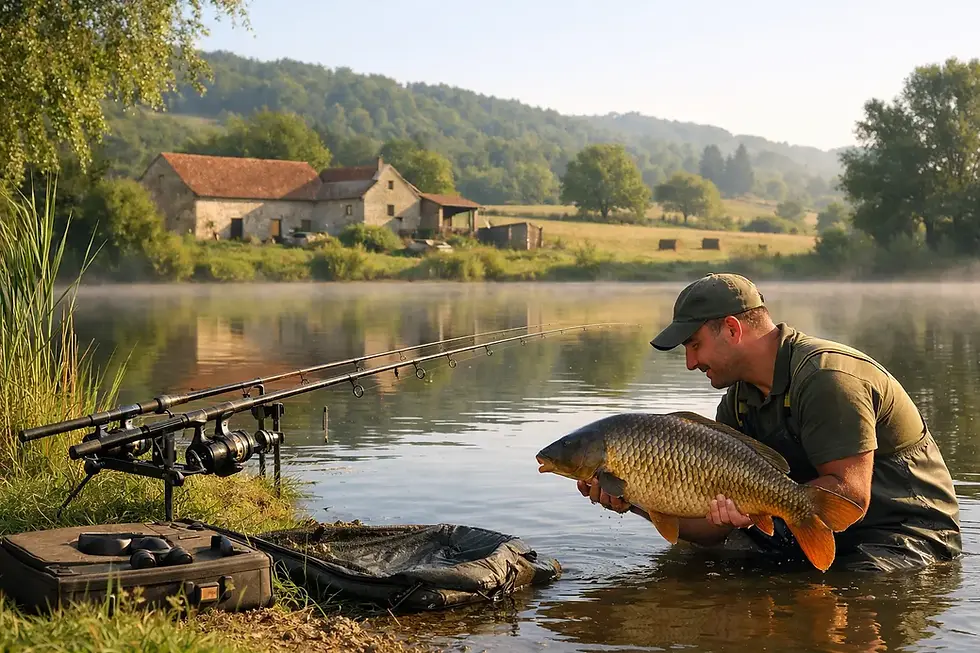
On a private lake, the whole rhythm changes. Lower angling pressure generally means fish behave more naturally. They can still be wary - big carp rarely become easy just because a lake is private - but they are not constantly being moved about by heavy footfall, repeated recasts and crowded swims. That can make location more honest and feeding patterns more consistent.
It also changes your own decision-making. Instead of wondering whether the next swim will free up, whether another angler will cast across a route, or whether someone else has started spodding on the back of showing fish, you can focus fully on your watercraft. For many experienced carp anglers, that alone is worth a great deal.
The case for a public fishery
Public fisheries are not a poor second option. Far from it. Some of the most memorable carp angling in Europe happens on accessible day-ticket waters, club lakes and larger public venues. They can offer variety, strong stocks, different depths and the sort of challenge that keeps you thinking right through the week.
There is also usually a lower barrier to entry. If you are local, flexible, or simply after a quick trip rather than a full holiday package, a public fishery can make perfect sense. You turn up, fish hard, and go home. For some anglers, that simplicity is exactly the point.
Public venues can also sharpen your angling. Competition for spots, changing pressure and fish that have seen everything will expose weak decision-making very quickly. If you enjoy solving difficult situations and do not mind a bit of unpredictability around space and atmosphere, you may genuinely prefer that environment.
The trade-off is that your result is influenced by more factors you cannot control. That matters more when the trip involves ferry costs, fuel, time off work and the expectation of a proper break rather than a quick overnighter.
Why privacy matters more on a carp holiday
A carp holiday is not just about bites. It is about how the whole week feels.
When anglers travel to France, they are usually chasing more than numbers. They want uninterrupted time on the bank, the chance of quality fish, and an environment where they can settle properly into the session. A private lake suits that better because it removes the background noise. You are not constantly reacting to other people. You can fish days and nights at your own pace, watch the water properly and build a plan that lasts more than a few hours.
That is especially valuable for small groups. If two or three mates book a week, they generally want to share the water rather than compete for it. They want to enjoy the trip together, not spend it squeezed into neighbouring pegs while strangers fish the rest of the lake. Privacy turns the session into a proper holiday without taking away the angling challenge.
For anglers bringing a partner or family member, the difference is even clearer. A quieter venue with accommodation on site feels far more relaxed than a busy public fishery where the whole atmosphere centres on turnover and bank traffic.
Fish quality and condition
One point that often gets overlooked in the private lake versus public fishery debate is fish condition. Not every private lake is well managed, and not every public fishery is over-fished. Still, lower pressure and tighter control over stocking, bait rules and angler numbers can make a real difference.
On a well-run private carp lake, the fish often carry better weight through the season and show less wear. Mouth condition can be better. Feeding can be more predictable. You also tend to get clearer guidance on what works on that water, which saves wasting the first day second-guessing everything.
On public waters, fish quality can still be excellent, but consistency is harder to guarantee. Heavy pressure, mixed angling standards and frequent handling can all affect how fish look and feed. If your main aim is to target a small number of quality carp in a calm setting, a private venue usually offers a stronger fit.
Practical comfort is not a small thing
Serious anglers will put up with rough edges if the fishing is right. That said, comfort matters more than many admit, especially on a week-long trip abroad.
A public fishery can be more basic by nature. Access might be awkward, facilities limited, and accommodation separate from the lake or not included at all. There is nothing wrong with that if you are travelling light and keeping costs down, but it adds friction. Every extra bit of organising takes time away from fishing.
A private lake holiday tends to be more straightforward. You arrive, settle in and get on with it. When accommodation is part of the package, the trip feels easier from the start. That convenience is not about luxury for the sake of it. It is about making the most of your week on the bank.
For anglers who only get one or two proper foreign trips a year, that ease is worth protecting. It means more rest, better focus and a more enjoyable session from the first evening through to the final morning.
Who should choose which?
If you enjoy busy waters, like adapting under pressure and are mainly interested in a challenge at a lower upfront cost, a public fishery can be the right call. It can also suit anglers who prefer short, flexible trips and do not need the trip to feel like a full holiday.
If you value space, exclusive access, quieter surroundings and a more controlled carp fishing experience, a private lake is the stronger option. That is particularly true if you are travelling from the UK, fishing with one or two friends, or want accommodation sorted as part of the booking.
This is where a venue such as La Retraite Carp Fishing stands apart. The appeal is not simply that it is private. It is that the privacy supports the whole experience - limited angler numbers, low pressure, quality water, and the ability to fish properly without the distractions that often come with crowded commercial venues.
Making the right choice for your next trip
The best way to choose is to be honest about what you want from the week. If your idea of a successful trip includes peace, watercraft, comfortable surroundings and a realistic shot at quality carp without feeling boxed in, private water will probably suit you better. If you thrive on busier banks and like the edge that comes with shared water, a public fishery may be more your style.
Neither is automatically better in every situation. But for a dedicated French carp holiday, where travel, time and expectation all carry more weight, privacy usually gives you more of what you came for. More room to think, more control over your fishing, and more chance to enjoy the sort of session you will still be talking about when you are back home.
That is often the difference that matters most - not whether the lake is private or public on paper, but whether it gives you the week you actually wanted when you booked it.


Comments